
Agricultural gypsum
GREEN GYPSUM
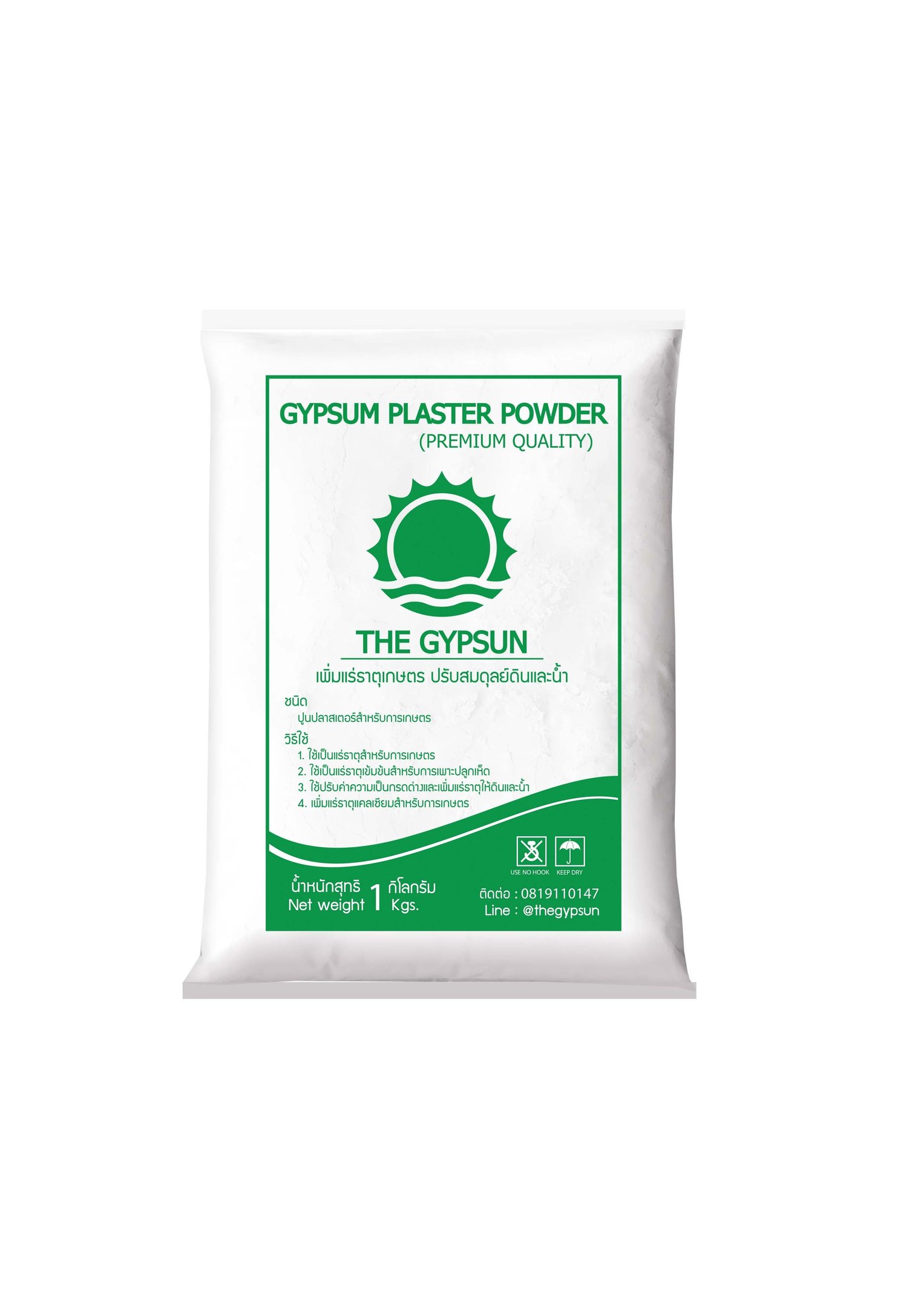
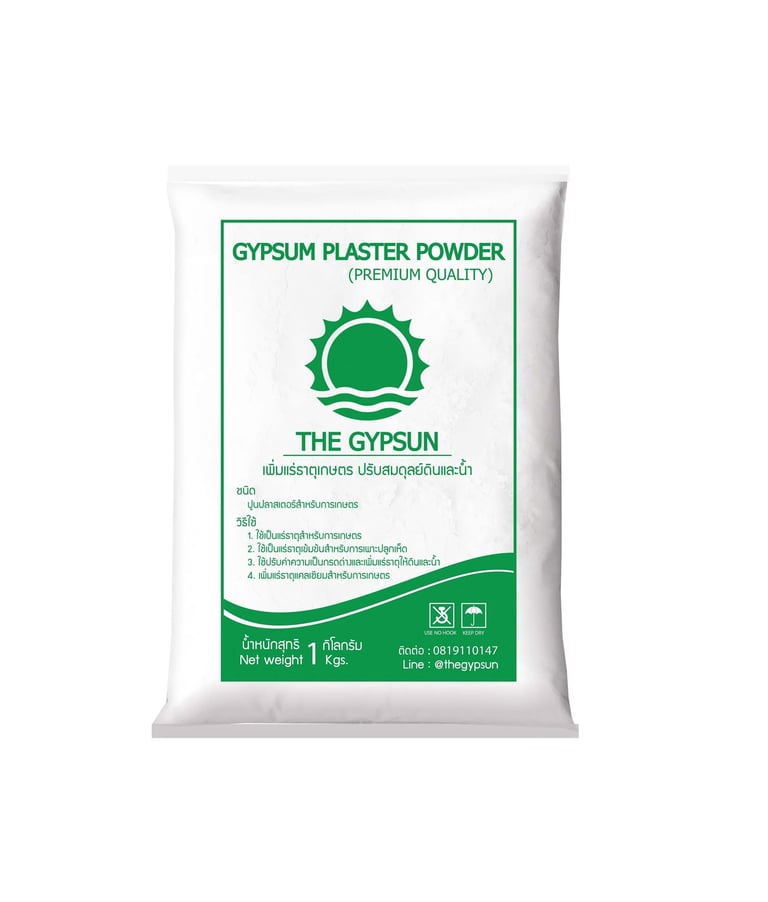
Gypsum, or agricultural gypsum, has the chemical formula CaSO4·2H2O. It contains CaO 32.6%, SO3 46.5%, and H2O 26.9%. The calcium and sulfur in gypsum are present as sulfates, which plants can use immediately (sulfate fertilizers on the market are often made by blending gypsum).
Order now!
To improve soil condition: 500–1000 kg per acre
Fruit trees: 4 kg per ton (split application: 2 kg applied around the tree base after harvest, and 2 kg during flower development)
Field crops, shallots, garlic, cassava, sugarcane: 500 kg per acre
Rice paddies: 120 kg per acre, split into two applications at 20 and 60 days after transplanting
Leafy vegetables: broadcast over beds as appropriate
Rubber and oil palm: 4 kg per tree, applied twice per year
Corrects saline soils
Reduces soil compaction or lumping
Reduces soil erosion and washout
Reduces loss of soil nutrients such as phosphorus and nitrogen
Aids chlorophyll synthesis in plant leaves
Stimulates root and shoot growth
Promotes root nodule formation in leguminous plants that fix nitrogen
Supplies important secondary nutrients (calcium and sulfur)
Aids plant cell division and strengthens plants
Supports growth of roots, stems, branches, leaves and shoots
Reduces premature flower and fruit drop
Prevents internal browning/softening (core problems) of fruit
Reduces fruit cracking
Component of plant amino acids, aiding protein synthesis
Helps produce chlorophyll for photosynthesis
Prevents yellowing from sulfur deficiency
Improves harvest quality—both flesh and aroma
Enhances oil synthesis quality in crops such as chili, shallot, garlic, and sesame

THE GYPSUN INTERTRADE CO., LTD.
55/44 Kanlapaphruek Road, Bang Khun Thian Subdistrict, Chom Thong District, Bangkok 10150
© 2025. All rights reserved.